You may have seen on the BBC this week that a rare-breed pig farmer in Dorset sold nine seven-week-old piglets at market for £2 each. After the market’s charges he ended up with a bill to pay. The National Pig Association says demand for pork is falling and independent farmers are selling up, and the British Pig Association warns that if we lose our native breeds, they can’t be replaced.
(BBC article: https://www.bbc.co.uk/news/articles/cqze4y38zk6lo)
We farm a rare breed too, so I wanted to explain what all this looks like from here at Lamellyn.
Feed
Feed is by far the biggest cost of keeping pigs. Ours has gone up 10% in the last twelve months. One supplier we used to buy from put their prices up 20% in one go three months ago. As a small farm we also can't make the most of the economies of scale by ordering large feed deliveries or growing it ourselves.
Keeping the breed pure
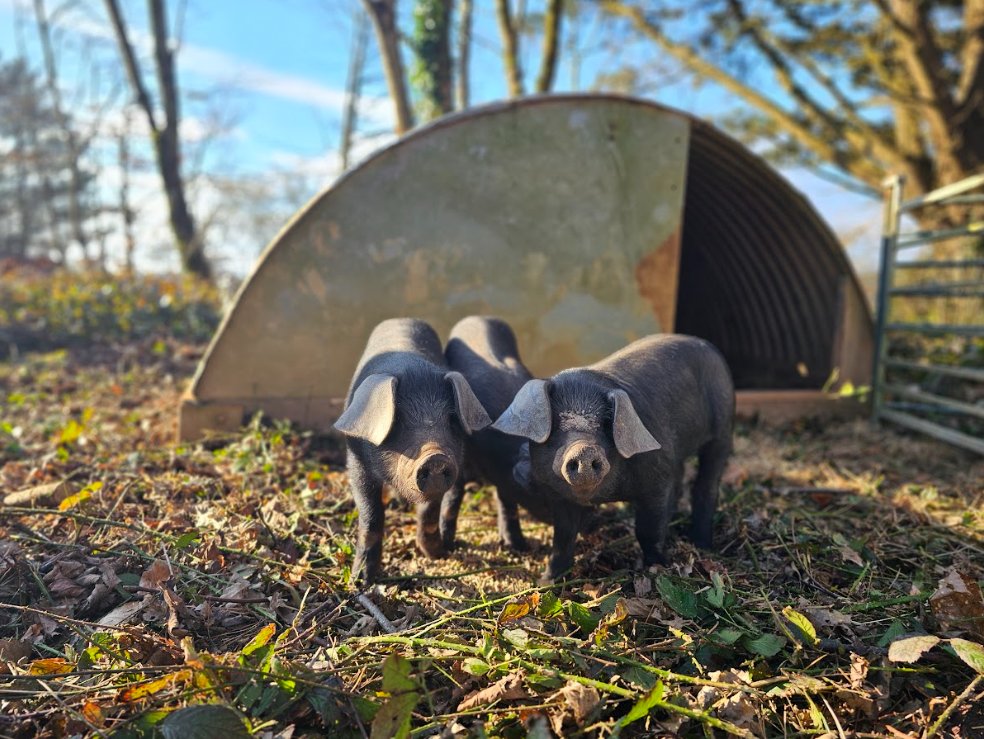
Our herd is pedigree Cornish Black. Every litter born here is birth-notified to the British Pig Association and we pay them to keep our herd on the register. It’s the only way for pigs to count as pedigree, and it’s what stops a rare breed slowly getting mixed into other breeds until it’s gone. It’s a cost commercial farms don’t have, and we think it’s worth it.
The abattoir
We use Lobbs and they are brilliant. But they’re short of staff and very busy and they struggled to fit our last group of pigs in. A small abattoir nearby is what makes it possible for a farm like ours to sell its own pork.
Britain had around 2,500 abattoirs in the 1970s. Today there are about 200. In a survey last year, a third of farmers said an abattoir they used to use had closed, and 43% said they couldn’t sell meat locally any more if theirs shut. Every one that goes makes it harder for the farms around it. The current state of the economy is making it harder and harder for small businesses like our local abattoirs to function.
(FarmingUK: https://www.farminguk.com/news/britain-s-abattoir-crisis-deepens-as-numbers-plunge-to-just-200_69346.html)
How our pigs are different
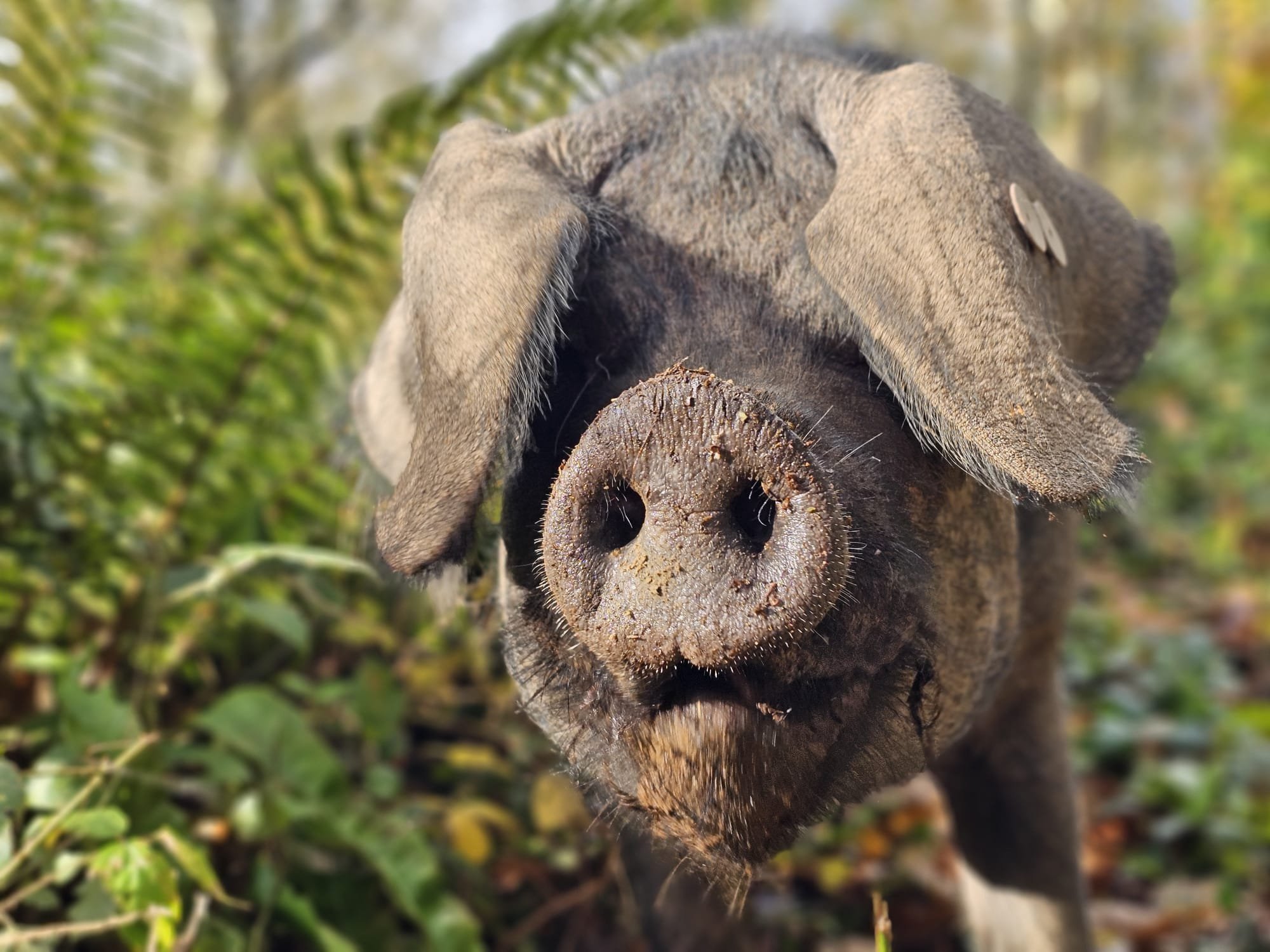
Most pigs in the UK are kept indoors, and most are commercial hybrids bred to grow fast and lean. They reach around 120kg in four to five months. Our pigs live outdoors and grow slowly, reaching 80–90kg in seven to eight months.
That extra time costs us more in feed and work, but it’s what makes the pork taste the way it does. Slow-grown pigs carry more fat, and fat is flavour. Their muscles are better developed, and joints like the shoulder are marbled with fat that melts as it cooks, so the meat stays tender and juicy. It’s a world away from mass-produced pork.
What you can do
If you want rare breeds and small farms to still be around in ten years’ time, the most useful thing you can do is buy from them: from farms, local butchers and farm shops (if you want top quality pork make sure to ask if it's raised outsdoors). It doesn’t have to mean spending more overall. As one of the breeders in the BBC piece said, eating a bit less meat but better meat goes a long way.
Our pork is in our shop at www.probusproduce.co.uk/shop. Delivery is free in Probus on any order, and free to Truro and St Austell on orders over £50.
Thank you for reading, and thank you to everyone who already buys from us. You’re the reason we can keep doing this.